






What is ICSI?
Intracytoplasmic Sperm Injection (ICSI) was developed in the early 1990’s as an alternative assisted reproduction method to standard IVF. The first baby following ICSI was born in 1992.
With ICSI a single healthy-looking sperm is injected into each egg allowing the technique to overcome any issues with sperm movement, count or morphology.
It offers the most effective and common treatment to unexplained infertility and most importantly male infertility, providing men that otherwise would have little or no chance of fathering their own genetic offspring, a real hope of fatherhood.
ICSI Video
How does ICSI work?
The early stages of ICSI are identical to those for standard IVF where the egg provider takes fertility medication to stimulate the ovaries and eggs are harvested around 36 hours following ‘trigger injection’ through Vaginal Egg Collection (VEC).
The eggs are then assessed for maturity and around 70-80% of the collected eggs will be mature (known as MII) and suitable to be injected.
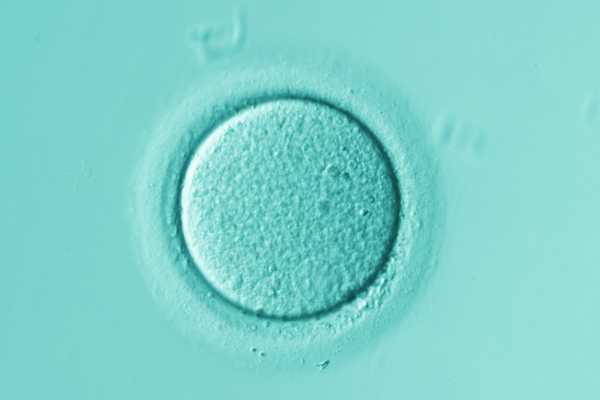
Mature egg
In conventional IVF the eggs are placed in a petri dish with around 100,000 sperm and fertilisation occurs through natural selection.
ICSI involves the selection of a single motile and normal shape sperm that is injected directly into the centre of the egg using a micro-injection needle under a high-powered microscope.
Only a small number of sperm are required for ICSI. This requires highly skilled practitioners as it is a very delicate technique. The eggs are then incubated and assessed the next morning for signs of fertilisation.
Depending on the egg and sperm quality we would expect 60-80% of the injected eggs to be fertilised and these will be cultured to develop into embryos.
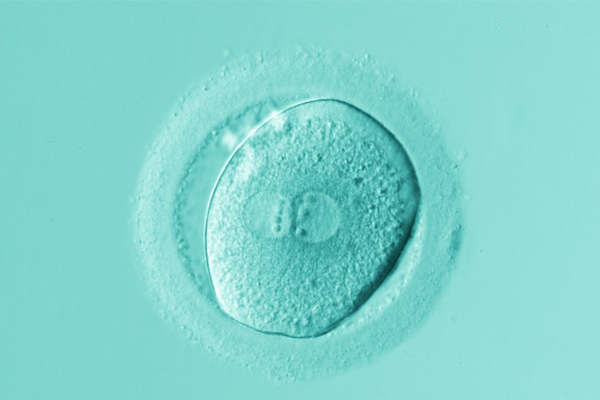
Fertilised egg
When is ICSI required?
ICSI is required when:
- Sperm quality is poor for standard IVF, such as low count or low motility
- Previous failed or poor fertilisation with standard IVF
- Sperm has been obtained surgically directly from the testicle (TESA) or epididymis (PESA)
- High DNA fragmentation in sperm
- Eggs have been previously frozen
We will not offer ICSI if we feel that IVF could work just as well, however, sometimes we might consider it on the day of egg collection depending on the quality of the sperm sample collected.
Are there any risks with ICSI?
ICSI is a very safe and routinely used technique offering fertilisation results comparable to those through standard IVF. However, as with every process, it carries a few small risks:
- It is a relatively new technique and as the children conceived are still very young, we cannot predict whether there it will have an effect in their adult life. Several large-scale studies have shown reassuring results with only a small increase in the risk of genetic abnormalities (3.3% versus 2.4% in the general population) in children born through ICSI. However, this is considered to be a result of inherent sperm genetic abnormalities, rather than the technique itself.
- It is a very delicate and relatively invasive technique and some of the eggs (around 3-5%) could be damaged during the procedure and cannot be used in treatment.
What’s the difference between ICSI and IMSI?
IMSI stands for intracytoplasmic morphological sperm injection where the sperm is examined under the microscope at a higher magnification compared to ICSI technique with scope to assess sperm morphology better and identify potential defects.
Studies have shown that IMSI doesn’t provide real beneficial effects and this treatment is red at HFEA traffic light system, indicating lack of effectiveness.

